Detection of H5N1 avian influenza in South West Victoria
Published on 30 July 2026
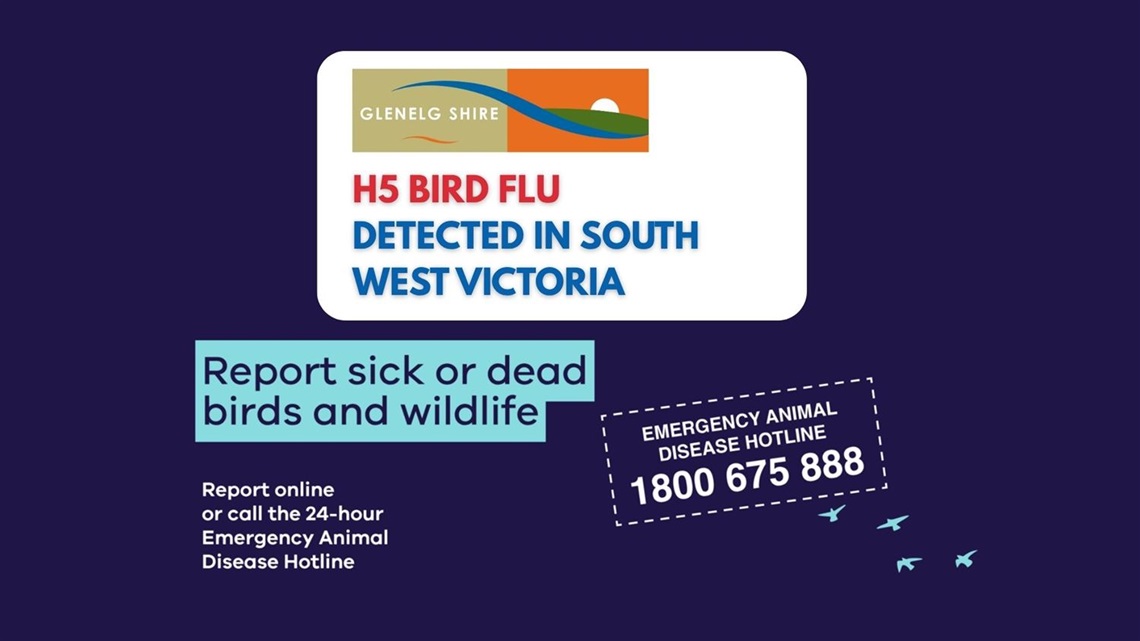
Glenelg Shire Council urges community vigilance following detection of H5N1 avian influenza in Portland
Glenelg Shire Council is urging residents and visitors to remain vigilant and avoid contact with sick or dead birds and wildlife following confirmation that the highly pathogenic avian influenza strain H5N1 has been detected in Victoria.
Preliminary testing has identified H5N1 avian influenza in a single greater crested tern found in Portland. Further testing is underway to formally confirm the result.
Chief Executive Officer Helen Havercroft said the detection highlights the importance of community awareness and prompt reporting.
"We understand this news may be concerning for our community, particularly given Portland's close connection to our coastline, waterways and natural environment.The advice from animal health and wildlife authorities is clear. If you see sick or dead birds, seals or other wildlife, do not touch them. Record what you observe, note the location and report it immediately.
Early reporting gives authorities the best opportunity to monitor the disease and help minimise impacts on wildlife, agriculture and our environment”
The Victorian Government has been preparing for a potential detection for some time and response arrangements are now in place.
Teams from the Department of Energy, Environment and Climate Action are conducting surveillance and monitoring, investigating reports, working with wildlife experts and industry in coordination with the Australian Government and other states.
While the risk to human health remains very low, residents are advised to avoid contact with sick or dead wildlife, including birds and marine mammals.
Ms Havercroft said Council was working closely with relevant state agencies and supporting community awareness efforts across the shire.
"Glenelg Shire is home to significant coastal and environmental assets, and we all have a role to play in helping protect local wildlife.
We encourage residents, farmers, recreational users and visitors to follow biosecurity advice and report any concerns to the appropriate authorities."
What to do if you see sick or dead wildlife
AVOID
- Contact with sick or dead birds, wildlife or their environment.
RECORD
- What you see.
- The location.
- Photos or videos if it is safe to do so.
REPORT
- Clusters of five or more sick or dead wild birds of any species.
- A single sick or dead seabird, waterbird, shorebird, bird of prey or marine mammal such as a seal, sea lion or dolphin.
Reports can be made through the Agriculture Victoria https://agriculture.vic.gov.au/biosecurity/animal-diseases/poultry-diseases/H5N1-avian-influenza-H5-bird-flu
or by calling the Emergency Animal Disease Hotline on 1800 675 888
Signs of H5N1 avian influenza in birds may include sudden death, lack of coordination, tremors, difficulty standing or flying, respiratory symptoms, swelling around the eyes or head, and unusual behaviour.
Poultry owners are also encouraged to review their biosecurity measures, including limiting contact between domestic poultry and wild birds, maintaining clean facilities and practising good hygiene when handling birds or eggs.
Ms Havercroft said the community's cooperation would be essential in responding to the disease.
"We are fortunate to have a community that values and cares for our natural environment. By following the advice of authorities and reporting sick or dead wildlife, residents can make an important contribution to protecting our region."
For more information or to report sick or dead wildlife, visit the Agriculture Victoria website or call the Emergency Animal Disease Hotline on 1800 675 888.